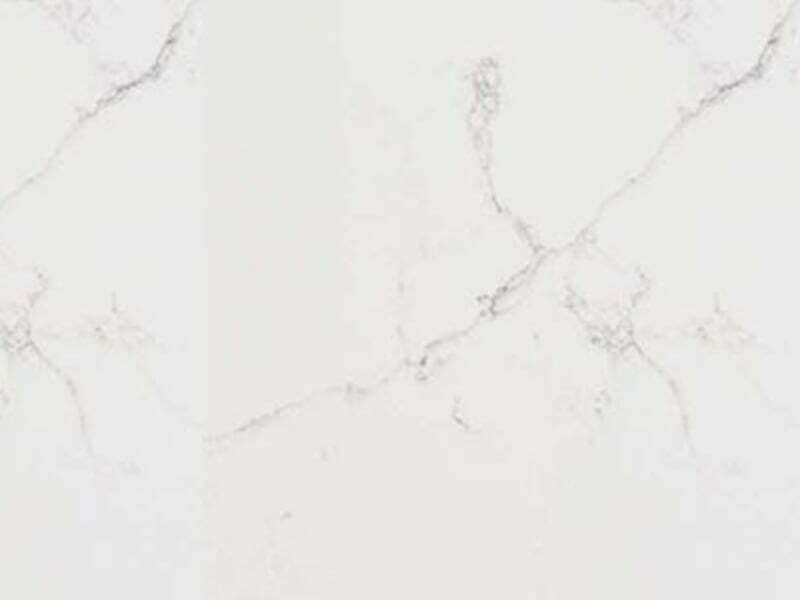

Porcelain and quartz are both non-porous, highly durable worktop materials that deliver outstanding performance in UK kitchens. On the surface they can look very similar, both are available in marble-look and concrete-effect designs, both require minimal maintenance, and both are priced at a similar level. But underneath, they are manufactured very differently and offer distinct performance characteristics.
What Is Porcelain / Sintered Stone?
Porcelain worktops, sometimes called sintered stone, are manufactured through a process of applying extreme heat and pressure to a mixture of minerals including feldspar, silica, and natural pigments. Brands such as Dekton by Cosentino and Neolith have developed proprietary sintering processes that produce surfaces with near-zero porosity and extraordinary hardness. The material contains no resins, which is a critical difference from quartz.
What Is Quartz?
Quartz worktops are engineered from approximately 90 to 93 percent crushed natural quartz crystals bound with polymer resins. The resins give quartz its flexibility and consistency but also impose certain limitations, most notably heat sensitivity. Quartz cannot withstand the temperatures of hot pans placed directly on the surface.
Key Differences
Heat Resistance
This is the most significant practical difference. Porcelain and sintered stone are genuinely heat-proof, you can place hot pans, oven trays, and cast iron cookware directly on the surface without any risk of damage. Quartz contains resin binders that begin to break down above approximately 150°C, meaning hot pans can scorch, discolour, or crack quartz surfaces. If you are a serious cook who regularly moves pans from hob to worktop, porcelain has a meaningful practical advantage.
Scratch Resistance
Both materials are highly scratch-resistant in everyday kitchen use. Sintered stone is technically harder and will withstand more aggressive abrasion, but for practical purposes both are excellent performers. Neither should be used as a cutting surface without a chopping board.
Stain Resistance
Both materials have near-zero porosity and are equally resistant to staining from kitchen substances. Neither requires sealing. Day-to-day cleaning with warm water and mild detergent is sufficient for both.
UV Resistance
Porcelain is UV-stable and will not fade or discolour in sunlight, making it suitable for outdoor kitchens and areas with large south-facing windows. Quartz contains resins that can yellow over time with prolonged direct sunlight exposure. If your kitchen has strong direct sunlight or you are considering outdoor use, porcelain is the superior choice.
Brittleness
Porcelain is harder than quartz but also more brittle. A sharp impact, dropping a heavy object onto a narrow section, for example, is more likely to crack porcelain than quartz. Quartz has slightly more flex due to its resin content, making it less vulnerable to impact damage. This is a real-world consideration, particularly around sink cutouts and narrow sections.
Comparison Table
| Property | Porcelain / Sintered Stone | Quartz |
|---|---|---|
| Heat resistance | Excellent (hot pans OK) | Moderate (use trivet) |
| Scratch resistance | Excellent | Very Good |
| Stain resistance | Excellent | Excellent |
| UV resistance | Excellent | Moderate |
| Impact resistance | Moderate (brittle) | Good |
| Outdoor use | Yes | No |
Conclusion
Both materials are excellent choices for modern UK kitchens. Porcelain wins on heat resistance and UV stability; quartz wins on impact resilience and typically offers a wider range of designs at accessible price points. If you cook frequently with high heat or want outdoor capability, porcelain is the stronger choice. For most busy family kitchens, either material will serve exceptionally well.
Stoneone supplies both quartz and sintered stone worktops. Contact us for samples and expert advice on which material is right for your kitchen.
Explore Our Range
Ready to get started?
Use our instant price calculator for a free estimate, or contact our team for personalised advice.